How to Build an Emergency Fund on a Small Income: A Step-by-Step Plan
How much to keep in your emergency fund, where to keep it and 9 realistic ways to save it even on a small paycheck — with real dollar examples.
What a high-yield savings account is, how much more you can earn, whether it's safe and what to check before you open one.
If your savings sit in a traditional savings account, you’re probably earning next to nothing in interest. A high-yield savings account is just as easy to use, but it can pay you many times more — without putting your money at risk.
It’s a regular savings account (you can deposit and withdraw money) that pays a much higher interest rate than average. They’re usually offered by online banks and some credit unions: without branches, they save on costs and can pay more.
Say you keep $5,000 saved for a year:
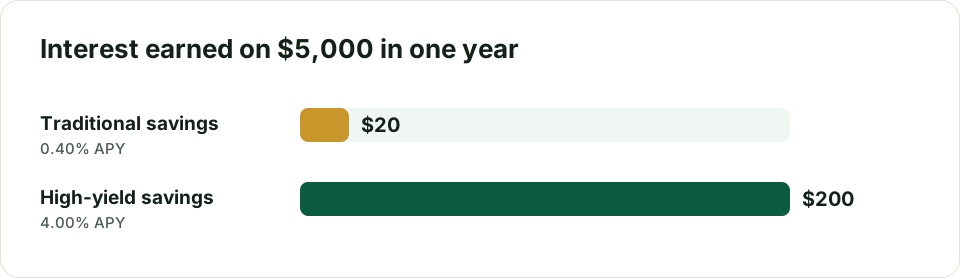
The rates are just an example — they change over time and between banks. But the gap between accounts is often large.
APY (annual percentage yield) shows how much you earn in a year including compound interest (interest earned on your interest). Always compare APY, not just the “interest rate.”
Important: these accounts have a variable rate. The bank can raise or lower it, usually when overall interest rates in the economy change.
Yes, if you choose well:
Be careful with apps that aren’t banks but offer “yield”: check which partner bank actually holds the money and whether it’s insured. And be wary of any “account” promising returns far above the market — it may be a risky investment, not a savings account.
It’s not ideal for money you won’t need for many years (like retirement). There, long-term investing usually makes more sense, though with more risk.
In the U.S., the interest you earn is taxable income. If you earn $10 or more in a year, your bank will send you Form 1099-INT for your tax return. In Canada, you can earn interest tax-free inside a TFSA; in the UK, inside a Cash ISA.
Can I lose money in a high-yield savings account? No, as long as it’s insured and you stay within the coverage limit. The only thing that can change is the interest rate.
Do I have to switch banks? No. You can keep your current checking account and open just the savings account elsewhere. Many people prefer that, because keeping savings “separate” makes them harder to spend.
Is it the same as a certificate of deposit (CD)? No. A CD locks in a rate for a set term but usually charges a penalty if you withdraw early. A savings account lets you withdraw whenever you need to.
This article is for educational purposes only and is not personalized financial advice. Example rates are illustrative and terms change; confirm them with each bank. Read our Disclaimer.
How much to keep in your emergency fund, where to keep it and 9 realistic ways to save it even on a small paycheck — with real dollar examples.
Real side hustle ideas to earn extra money in your spare time — including options for bilingual people — plus how side income is taxed and how to spot scams.